Where the UK Screen Industry Meets Next: UK Production Summit at Aesthetica

The UK Film Production Summit returns to York on Thursday 5 November 2026, as part of the BAFTA-Qualifying Aesthetica Film Festival, bringing together more than 150 production companies, commissioners, development executives and creative organisations. Now in its second year, the Summit arrives at a pivotal moment for the British screen industry, as established models of production and distribution undergo profound change. Film and high-end television remain major contributors to the UK economy, attracting international investment and supporting a globally recognised creative infrastructure. However, behind the headline figures, independent producers are navigating tighter commissioning budgets, rising production costs, changing strategies from global streamers and increasingly fragmented audiences. At the same time, developments in artificial intelligence, virtual production and new distribution models are creating possibilities that would have seemed distant only a few years ago. The Summit offers a space to consider what these shifts mean not simply for the business of production, but for the future of storytelling itself.
The breadth of organisations represented at this year’s event reflects the complexity of that landscape. Participants include Film4, Working Title, BBC Film, BBC Children’s, Sky, ITV and Channel 4, alongside Aardman, Sister, Element Pictures, Studio Lambert, Raw Films, Cinesite, Ridley Scott Associates and Quay Street Productions. The network extends to the BFI, Screen Yorkshire, Film London, the Production Guild of Great Britain, Sony, Paramount/Channel 5 and Banijay Rights, alongside independents including Blink Productions, Mindhouse, Good Chaos, Potboiler Productions, Wellington Films, Somesuch, The Mill and Fight Gravity Films. This diversity matters because the screen industries can no longer be understood through film and TV alone. Games, podcasts, music, advertising, animation, immersive media and emerging technologies are increasingly connected, creating new collaborations and questions around ownership, audiences and intellectual property. Organisations including EA, Activision, Audible, RADA, the AI Media Institute and the Arts and Humanities Research Council show just how far the creative ecosystem has expanded.
One of the defining conversations this year will explore the relationship between music and screen storytelling. Telling Stories Through Music brings music supervisors into conversation around the ways scores, sound and song can shape emotion, character and narrative. The discussion will consider the creative decisions behind the most memorable screen moments, as well as the increasingly changing landscape of sync and collaboration between composers, directors, producers and music teams. In an era when a song has the capability to transform the identity of a production, become a cultural signifier or introduce audiences to an artist, music has become far more than an accompaniment to the image. It can establish a world, alter our understanding of a character or remain with an audience long after the screen has gone dark. Examining that relationship offers a wider insight into how contemporary storytelling is becoming increasingly collaborative and cross-disciplinary.
The Summit also considers how the architecture of storytelling itself is changing through its Trends in Storytelling panel. Chaired by Jim Campbell of RSA, the discussion brings together commissioners from Sky and Warner Bros. to examine developments across film, television and streaming. Questions around changing audience behaviours, commissioning priorities, formats and the growing influence of franchises sit at the heart of the conversation. For independent producers, these shifts have immediate effects, particularly at a time when budgets are under pressure and competition for attention is intensifying. How can ambitious and distinctive work be made when financial risk is increasingly difficult to absorb, and how can original ideas find space beside established properties and globally recognisable franchises? These are not simply commercial questions, but ones that directly affect diversity, experimentation and creative risk-taking that have long characterised British screen culture.
Independent production has provided one of the UK’s greatest creative strengths, offering writers, directors and producers the chance to develop unique voices before moving into larger-scale projects and global collaborations. That ecosystem, however, depends upon investment, commissioning diversity and the ability to take risks. As economic pressures increase, there is a danger that the pipeline becomes narrower, with established properties, proven formats and familiar names taking precedence over more experimental work. At once, technological change is introducing new possibilities for production, while raising fundamental questions around authorship, copyright, employment and the value of human creativity. International partnerships and emerging platforms are opening routes towards new audiences, suggesting that disruption does not have to mean contraction. The challenge is ensuring that innovation becomes a means of expanding creative possibility not a tool for reducing cost.
This is where Summit’s place within the BAFTA-Qualifying Aesthetica Film Festival becomes significant. The Festival connects the industry debate and the filmmakers, artists and audiences shaping the future of screen culture. Rather than considering production as an isolated commercial process, the wider Festival context situates it within a landscape of contemporary art, experimentation and cultural exchange. Attendees can also take part in Meet the Music Industry, connecting screen professionals with composers, musicians and music businesses and opening conversations across traditionally separate sectors. The Aesthetica Art Prize at York Art Gallery offers another perspective, bringing audiences into contact with artists exploring technology, politics, image-making and contemporary culture. Alongside the UNESCO City of Media Arts EXPO, these encounters place the Summit within wider discourse on how creative practices are responding to a changing world.
York itself adds another dimension to that conversation. Away from London’s traditional industry centre, the city provides a setting in which national and international questions can be considered alongside the talent, infrastructure and creative activity developing across the regions. Its position within the wider Aesthetica programme makes it possible for industry professionals to encounter filmmakers, artists and practitioners working outside conventional production structures. This matters at a time when questions of geography, access and opportunity are becoming increasingly important to the future of the UK creative economy. The concentration of decision-makers in one place also creates opportunities for informal exchange, allowing producers, commissioners, musicians, technologists and emerging practitioners to meet beyond the formal structures of panels and presentations. In that sense, the Summit is as much about creating relationships as it is about predicting what comes next.
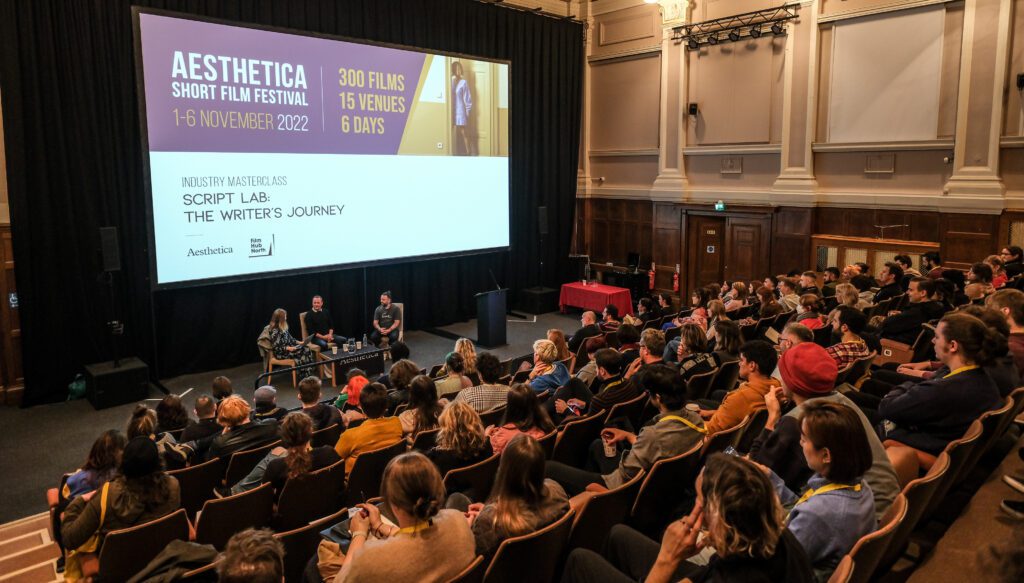
The value of that meeting became clear at last year’s inaugural Summit, which brought together producers, commissioners, development executives and creative leaders at a moment of rapid transformation. Among the keynote speakers was Mark Herbert, CEO of Warp Films, whose company has played an influential role in British independent cinema and television. His presence reflected the ambition of the event to look beyond celebrating the strength of the sector and instead interrogate the forces reshaping it. A year later, the pressures facing production have become no less urgent, while the possibilities offered by new technologies, international collaboration and changing forms of storytelling have continued to grow. The second edition therefore arrives not as a repetition of the first, but as a chance to deepen a conversation that is becoming increasingly necessary. What emerges from that conversation may ultimately be as important as the individual panels themselves: a shared understanding of how the UK’s screen industries can remain distinctive, ambitious and open-minded in an increasingly changing world.
On Thursday 5 November, York will once again become a meeting point for the people commissioning, financing, producing and imagining the next generation of British screen work. The significance of the UK Film Production Summit lies in its ability to bring these different perspectives into the same space, connecting the commercial realities of production with artistic practice and emerging technologies. Its place within the BAFTA-Qualifying Aesthetica Film Festival further strengthens that exchange, creating a dialogue between the structures of the industry and the creative work that challenges, expands and reimagines them. At a time of financial constraint and technological disruption, there is considerable value in creating a space where the industry can step outside the immediate demands of production and consider its wider direction. The future of British screen culture will not be determined by a single broadcaster, platform, technology or funding model, but through the relationships formed between people and disciplines. York offers a place for those conversations to happen, and for the people shaping the industry to begin imagining what is next.
Aesthetica Film Festival 2026 runs 4-8 November in York, UK. Click here to book your festival pass.
Words: Simon Cartwright